Integral Sound Healing
Sound and vibration, used with intention on and around the body, to bring the nervous system down out of stress and the whole of you back into harmony. Not background music. A live session, read and answered in the moment.
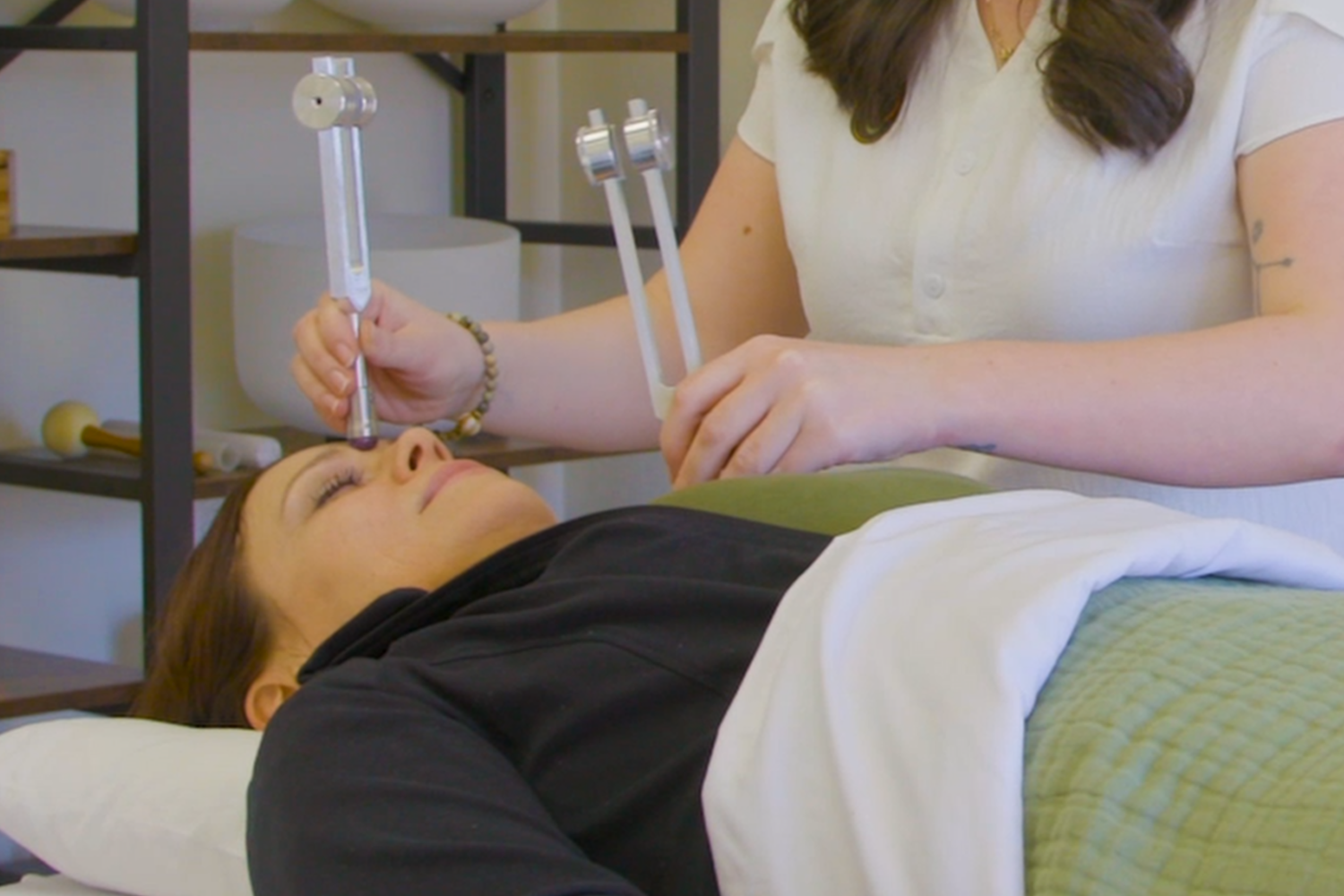
Sound as a way back to harmony.
Integral Sound Healing uses different tools, tuning forks, crystal bowls, gongs, drums, and resonance, to help the body let go of tension, the nervous system downshift, and the mind settle.
The word "integral" is about the approach. It takes in the whole person, body and feeling and mind, and the connection between them.
Here you can experience sound healing in a few different offerings. See offerings · Meet the practitioner
The principles behind it.
For anyone who wants the reasoning under the experience, here is how sound is understood to work on the body.
Resonance
Sound is vibration, and the body, mostly water and soft tissue, carries it well, so a low tone isn't only heard but felt moving through you. The thinking is that steady, resonant sound helps the body settle toward its own balance.
Entrainment
The brain tends to fall into step with a steady outside rhythm, an effect known as entrainment. Slow, repeating tones can gently encourage the slower brainwave patterns that come with deep relaxation and meditative states.
The vagus nerve
The vagus nerve runs the body's rest-and-digest side, the shift out of fight-or-flight and into recovery. Gentle vibration and low tone may help engage it, nudging the body toward a calmer, more restorative state.
Awareness and release
Under the sound, the mind quiets enough to feel what the body has been carrying, the held breath, the tight jaw, the tension you'd stopped noticing. Noticing is often the beginning of letting it go.
How a session goes.
A first visit starts with a conversation. Before any sound, the practitioner sits with you to understand what brought you in, what your days ask of you, and what you're hoping for. The session is shaped around that, not a fixed routine.
Then you're invited to settle. The practitioner guides you into a quiet, meditative state where the mind slows, then reads the body and the field around it, sensing where tension is held and where the energy feels stuck. Instruments and various vibrations are used on and around the body to restore harmony. She holds a safe, intentional space, so you can go as deep as your body is ready to.
Afterward, people often describe feeling lighter and more at ease, a tension they'd been holding finally let go, the noise in the head quieter, the body softer than when they walked in. What surfaces, and how long it stays, is different for everyone.
Later visits build on the first. They give the work continuity, room to reflect, and time for it to settle in. Each one adds another layer of support, whether you come for balance, for clarity, or simply for the stillness.
Not sure which session?
Three different traditions, three different jobs. Here is the quick way to tell them apart.
What it helps with.
People come for stress, sleep, anxiety, and the wound-up feeling that won't let go. Many find it deeply calming, and a way back into the body, alongside their own care.
What it sits alongside.
Sound reaches deepest once the nervous system has already begun to settle. A few that set it up well:
What people ask.
Do I need experience with sound healing or meditation?
No. The only thing asked of you is to be present. The effects don't depend on prior experience or belief. However it unfolds, the experience is your own.
How long is a session?
Usually 60 to 75 minutes, to allow time for intake at the start and integration afterward.
What instruments does the practitioner use?
Crystal and Tibetan singing bowls, precision tuning forks at specific frequencies, frame drums, and gongs. Which ones show up in a given session depends on what the practitioner is reading in the moment, not a set list.
How is this different from the vibroacoustics in the sauna?
The sauna plays pre-recorded tracks through the structure, a self-guided part of that experience. This is a live, responsive session with a practitioner reading and answering in real time. The difference is the presence.
Can it help with trauma?
It's one of the gentler body-based ways in, because it doesn't ask you to talk through anything. It works with the nervous system directly. The practitioner works with trauma-informed care, at the pace your body can receive, and alongside the support you already have.
Classes and events with sound healing.
Nothing on the calendar right now. New classes and events are added often, so check back soon.
The nervous system remembers how to rest. Sometimes it needs help finding the way.
Sound healing sessions are bookable alongside any pass at member pricing, or on their own. Offered alongside your own care, never instead of it.