Breakouts, redness, or skin that looks tired?
Settle back under a panel of colored light, each color set for a different concern. There's no heat and nothing to do but rest while it works on the surface of your skin.
Colored light, matched to the skin.
LED light therapy uses different colors of visible light, each one tuned to a different concern. The light is gentle and non-invasive, with no heat and no recovery time. Skin cells absorb it and respond, and over a course of sessions that shows up as clearer, calmer, or firmer skin, depending on the colors used.
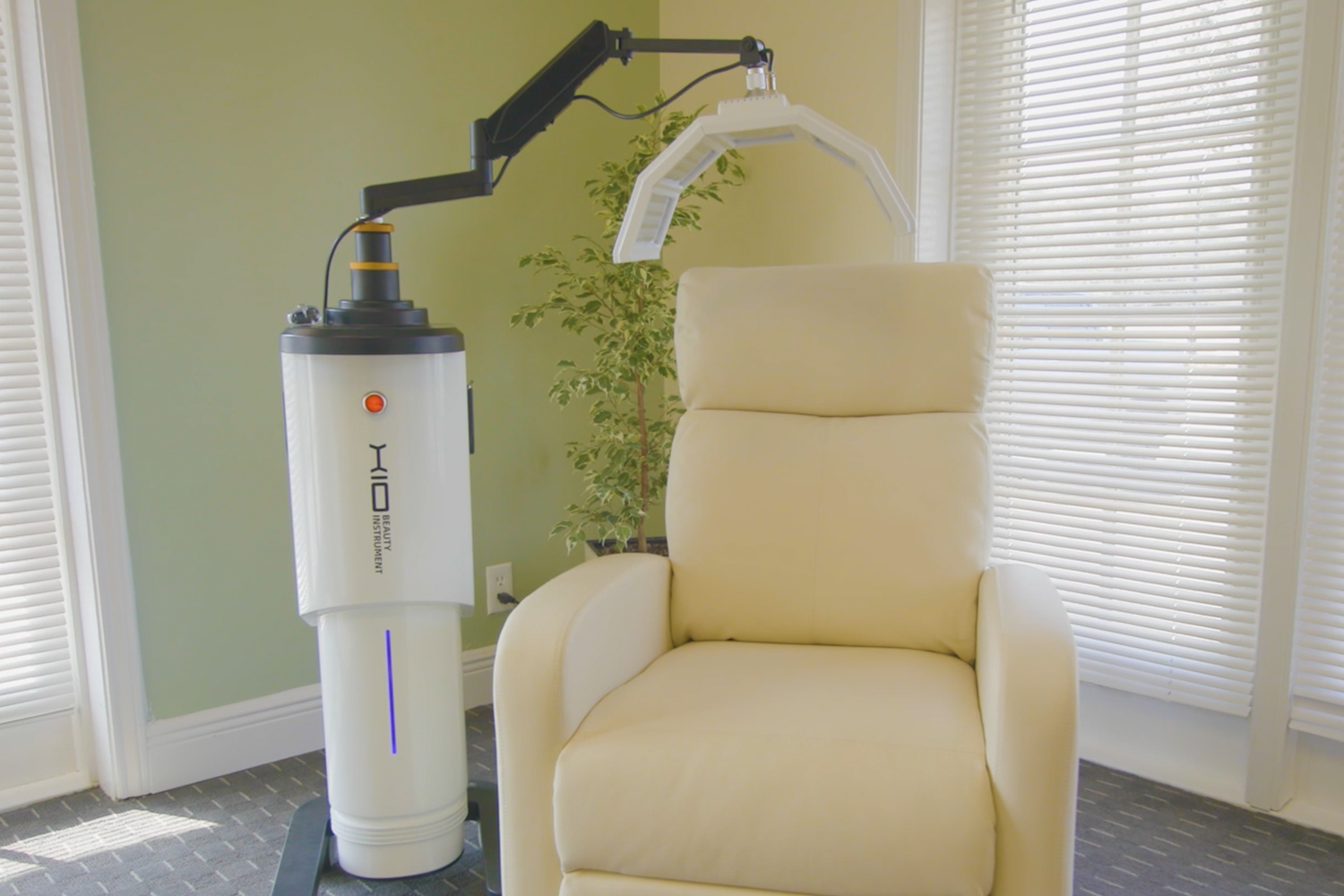
Our device is a curved panel that shines one of seven colors at a time, held close to the face and neck. It is the skin-focused counterpart to the full-body red light room. Where that panel is built for whole-body recovery and overall skin, this one is set up for specific facial concerns, from breakouts and redness to tone and the first fine lines.
A color for each concern.
Each session is set to one color, chosen for what brought you in.
- RedSupports collagen and firmness, softens the look of fine lines, and, lowered over the scalp, may help thinning hair.
- BlueTargets the bacteria behind breakouts and helps calm oily, blemish-prone skin.
- YellowEases the look of redness and supports circulation near the surface.
- GreenCalms and balances the skin, and helps even out tone.
- CyanSoothes sensitive or stressed skin.
- PurpleBlends red and blue, often used for blemish-prone skin.
- WhiteReaches a little deeper to support overall renewal.
What a session feels like.
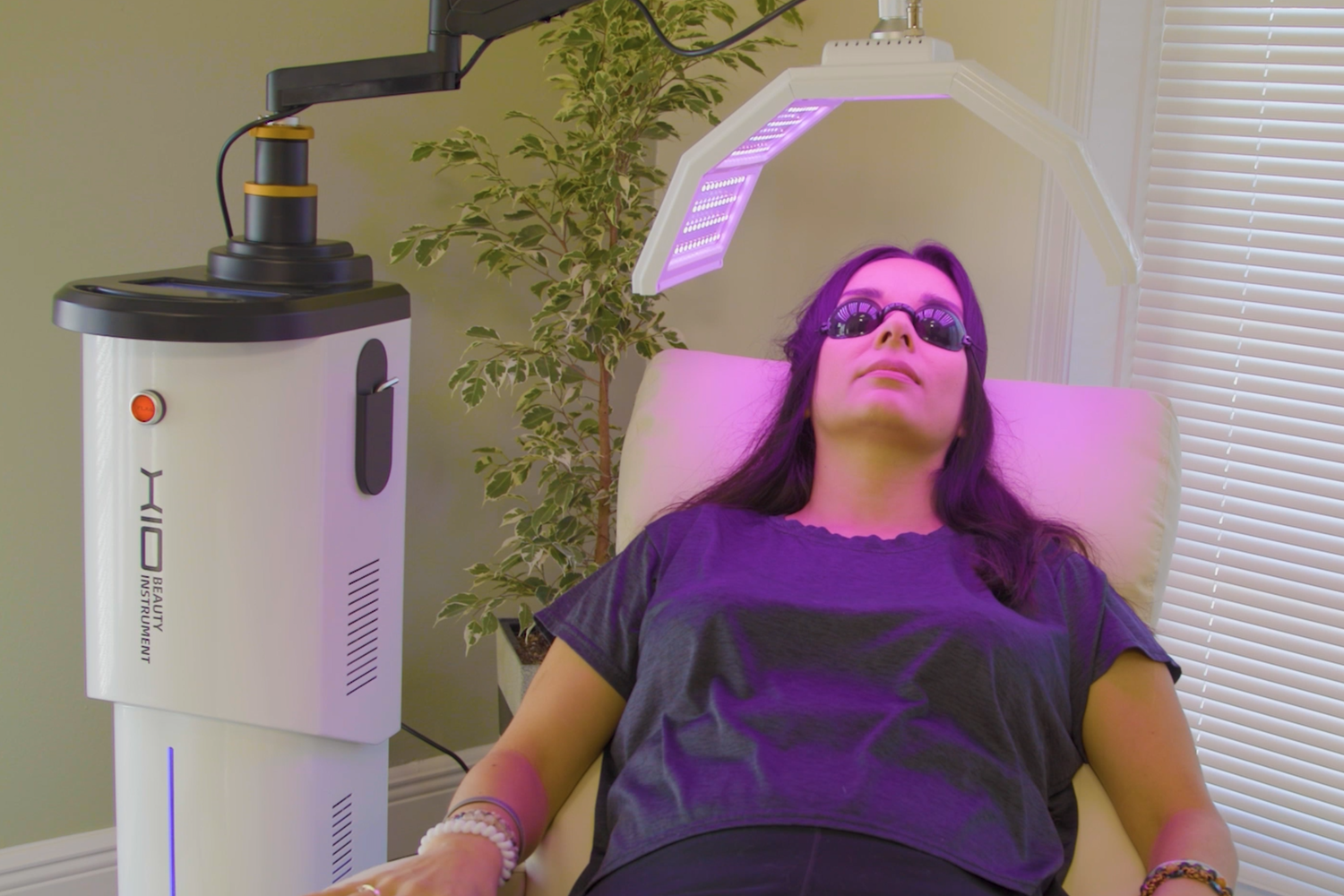
LED is one of the gentlest sessions here. You settle back, the panel of colored light is set over your face, and you close your eyes or wear the shades we provide. There is no heat and little to feel, just soft, bright light.
There is nothing to do. Most people rest, breathe, and let the time pass. A session runs thirty minutes, and the work does not depend on effort, you only have to be in the light.
Afterward skin can look a little brighter or feel calmer, though the real changes, in tone, texture, and breakouts, build over a run of sessions rather than after one.
What this pairs with.
LED is calm and passive, an easy add to a longer visit.
Red Light Therapy
The full-body counterpart. The panel is for whole-body recovery; the LED room is for the face.
Learn more →Full-Spectrum Sauna
Warm through and open the skin in the sauna, then rest under the colored light.
Learn more →Halotherapy
Salt air is traditionally used for the skin, and sits gently alongside a light session.
Learn more →What the research shows.
Red light supports collagen in the skin and, held over the scalp, may help thinning hair. Blue light helps clear breakouts. The other colors are used widely in skincare, on lighter evidence. Here is where each stands.
Read the research & sourcesShow less
The strongest evidence is for red light and the skin. In a randomized controlled trial of red and near-infrared light, people saw measurable improvements in complexion and skin roughness over a course of sessions, and ultrasound confirmed a real increase in collagen density.1 That is a structural change, not just a passing glow.
For breakouts, a 2019 review that pooled fourteen trials found blue light improved acne in most of the studies that measured it, though the trials were mostly small and short.2 It is a gentle, low-effort option, and the size of the effect is modest.
Red light at this wavelength can reach the hair follicle, and that is the mechanism behind its use for thinning hair. The controlled trials that showed regrowth, including a double-blind randomized trial of an FDA-cleared scalp device, used caps that sit close to the scalp and part the hair to reach the follicles.3 Our panel lowers over the top of the head rather than sitting on it, so it delivers the same red wavelength but a lighter, less direct dose. For pattern thinning, the common kind, it is a gentle, low-risk option, though the strongest evidence comes from closer-fitting devices and the benefit varies from person to person.
The other colors, green, yellow, and the rest, are used widely for tone, redness, and calming, though the evidence behind them is thinner.
Sources
- Wunsch A, Matuschka K. A controlled trial to determine the efficacy of red and near-infrared light treatment in patient satisfaction, reduction of fine lines, wrinkles, skin roughness, and intradermal collagen density increase. Photomed Laser Surg. 2014;32(2):93–100. PubMed
- Scott AM, Stehlik P, Clark J, et al. Blue-light therapy for acne vulgaris: a systematic review and meta-analysis. Ann Fam Med. 2019;17(6):545–553. Journal
- Thomas M, Stockslager M, Oakley J, Womble TM, Sinclair R. Clinical safety and efficacy of dual wavelength low-level light therapy in androgenetic alopecia: a double-blind randomized controlled study. Dermatol Surg. 2025;51(4). PubMed
These studies describe red, near-infrared, and blue light in general, not this specific device, and none is a promise of a result. The clearest support is for collagen and for breakouts; the hair trials used devices that sit closer to the scalp than this panel.
This is wellness support, not medical treatment. It supports the skin's own processes and works alongside your care, not in place of it.
What people ask.
Is LED light therapy safe, and does it suit all skin tones?
Yes, and it suits all skin tones. The light is gentle and carries no UV, so it does not cause the kind of damage sun exposure does. A few things to flag at intake: if you take a medication that raises light sensitivity (some antibiotics, acne, or psychiatric medications), or if you are pregnant, tell us so we can adjust. You will close your eyes or wear shades during the session.
Is this the same as the full-body red light therapy?
They overlap, but they are set up for different jobs. The red light room is a full-body panel for recovery, muscle and joint aches, and overall skin. This is a range of colors used close to the face, neck, and head, for specific concerns like breakouts, redness, tone, and thinning hair. For whole-body recovery, choose the panel; for a facial concern, this is the better fit.
How soon will I see a difference?
It builds rather than switches on. Calming and a brighter look can show early, while changes in tone, texture, and breakouts tend to come over several weeks of regular sessions. Steady, repeated sessions matter more than any single one.
Does it hurt, and what should I do before?
There is no heat and no pain, just colored light. Come with clean skin if you can, with makeup and heavy sunscreen removed, so the light reaches the surface. Beyond that, there is nothing to prepare.
Rest under the light. Let your skin do the rest.
LED light therapy is available on all pass tiers, on its own or after a sauna or soak. A calm, hands-off way to care for your skin, ease breakouts and redness, and support the slow work of collagen. It works alongside your care, not in place of it.