Aching joints, a stiff back, a body that won't unwind?
Sink into warm water and let the weight come off. The heat loosens tight muscle and eases stiff joints, the float lifts the load from your back and joints, and most people climb out looser than they came in.
What a warm mineral soak does.
The mineral bath is a warm soak in water with magnesium sulfate, also called Epsom salt, and trace minerals dissolved in it. A few simple things do the work. The warmth relaxes tight muscle, eases stiff and achy joints, and brings blood to the surface. Because the body floats, the water lifts much of its weight off the joints and the spine, giving them a real rest from the load they carry all day. And the magnesium salt softens the water and is gentle on the skin.
You may have seen Epsom baths sold on the idea that you soak magnesium into your body through the skin. The fuller picture, which we get into below, is that the magnesium does not reach your bloodstream. But it does soothe the skin, and the deeper relief you feel is the warm water and the float. People use the bath most for sore, stiff joints, tired muscles, dry or irritated skin, winding down, and sleep. It is the most hands-off session here: you get in, and the warmth and the water do the rest.
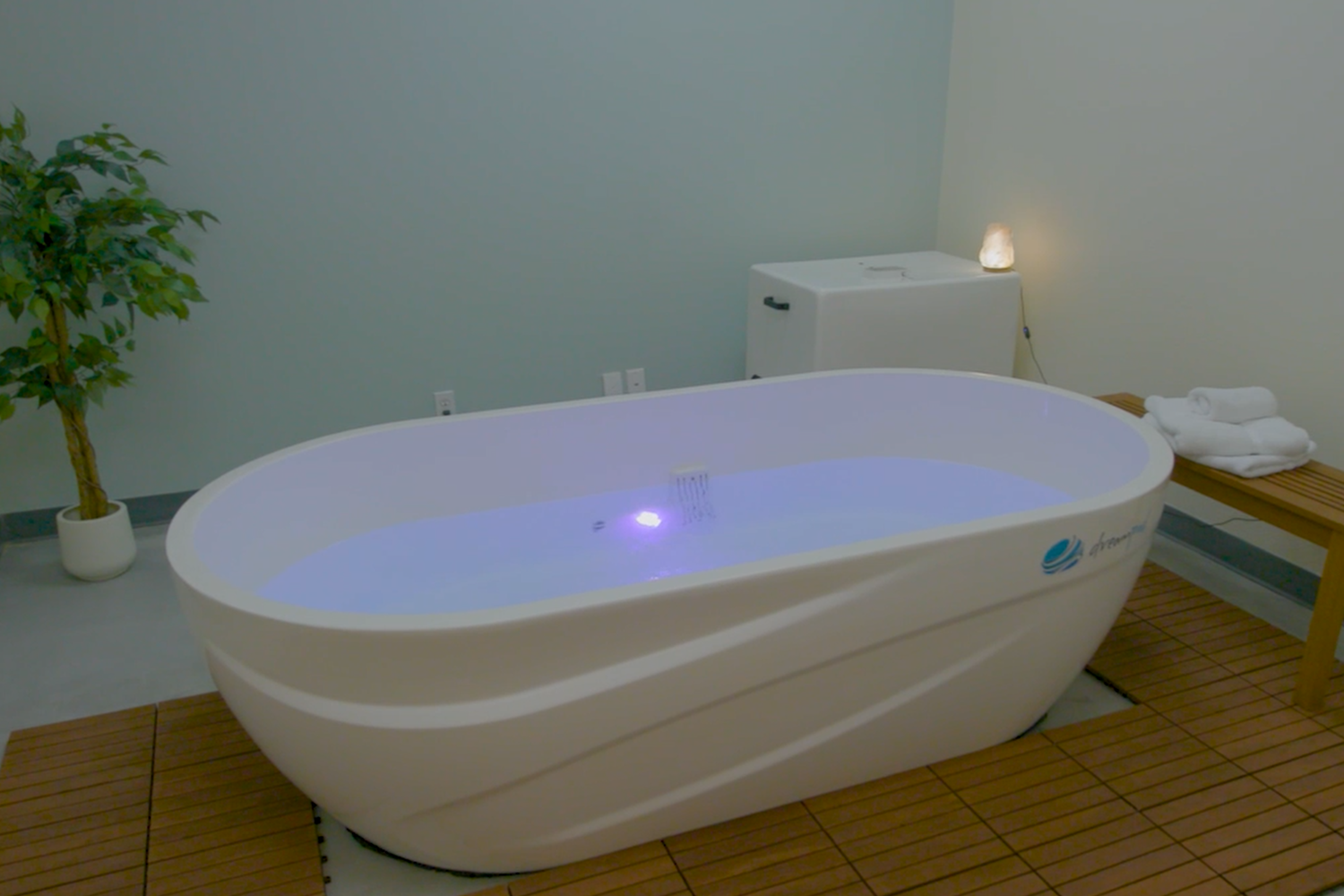
What a session feels like.
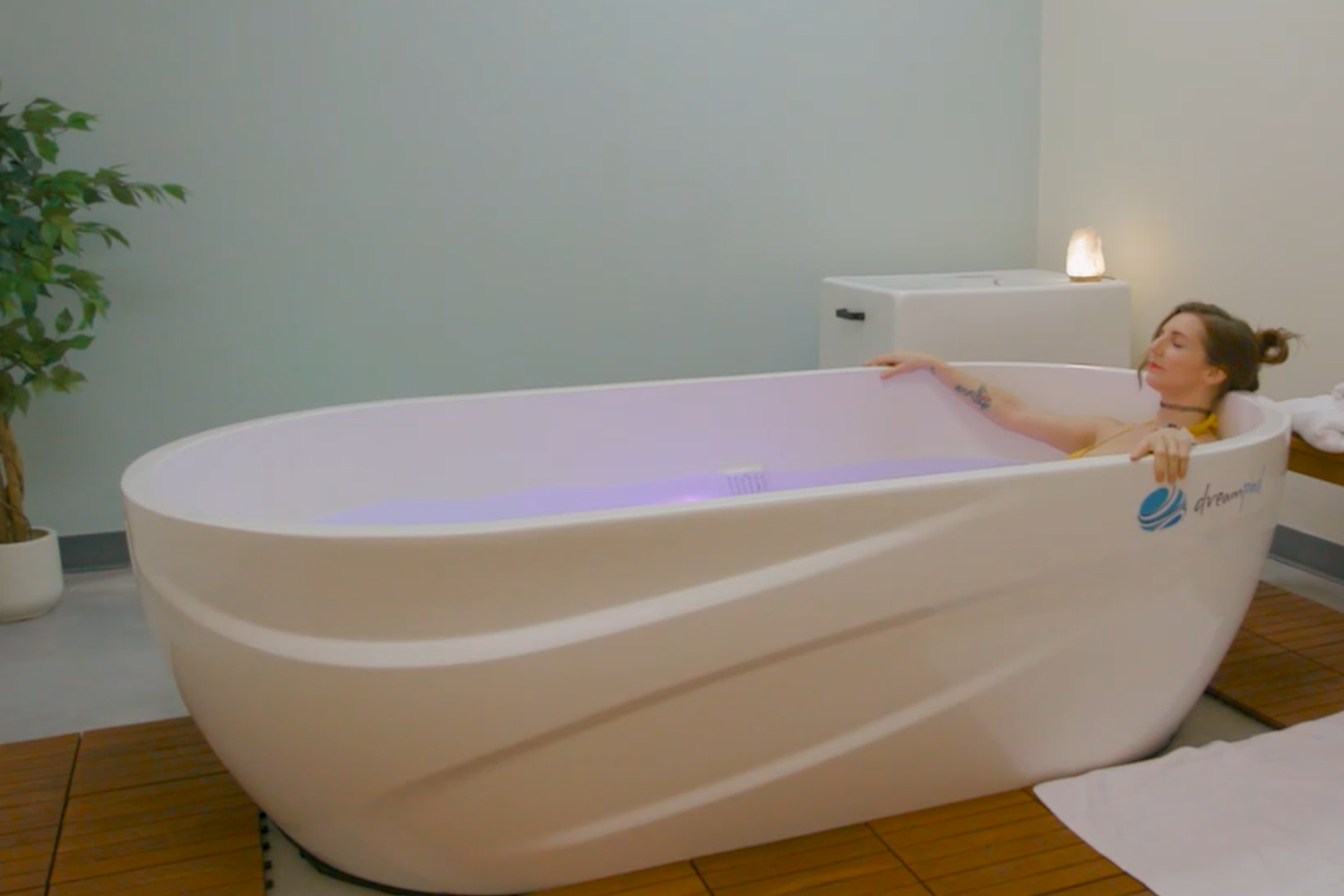
The first few minutes are the relief most people come for. As you settle in, the warmth spreads, the back eases, and the shoulders drop. The braced, guarded feeling that sore joints and a tight back create starts to let go.
The warmth is deep and even, and it reaches the muscle and the tissue around the joints. If you carry morning stiffness, it tends to soften here, not gone, but easier to move through.
Most people lose track of the time. Thirty to forty minutes in warm water leaves the body feeling unusually light, the particular ease of weight lifted off. Many come in carrying real soreness and leave moving more freely. Soak in the evening and it can help you fall asleep more easily later on.
Where this therapy really helps.
What this pairs with.
The bath is the calmest, most hands-off session here, so it sits easily before or after almost anything.
Zero-Gravity Chair
Both are about resting the body and taking the load off, an easy, low-effort pair for a recovery visit.
Learn more →PEMF
PEMF is a quiet, passive session that pairs naturally with the bath on a joint-and-recovery day.
Learn more →Red Light Therapy
Red light is another calm, passive session that sits well alongside a warm soak.
Learn more →Russian Muscle Stim
Russian stim works the muscle directly, and the bath is an easy way to relax and recover around it.
Learn more →Contrast Therapy
Follow the warm bath with a cold plunge and you have a gentle take on contrast, deep warmth into a cold finish.
Learn more →What the research shows.
Pooled research backs the warm soak for easing aches and joint pain, for circulation, for sleep and winding down, and for the skin. The deeper relief you feel is the heat and the float, not minerals soaking in.
Read the research & sourcesShow less
For aches and joint pain, the evidence is broader than people expect. Pooled reviews have found that warm mineral baths ease pain and improve quality of life in osteoarthritis,1 reduce chronic low back pain and improve how the lower back moves,2 and lessen the pain of fibromyalgia.3 The fair caveat is that the individual studies are often small or middling in quality, so this is a real but gentle benefit, not a dramatic one.
The warmth does something for circulation as well. Warm water widens the blood vessels and gets the blood moving, and the water's gentle pressure helps push it back toward the heart. As a regular habit, warm-water immersion has been shown to improve how well the blood vessels work and to lower blood pressure, in a study where sedentary adults soaked several times a week for eight weeks.4 That routine was more frequent and warmer than a typical soak, so a single bath is better understood as the everyday version of the same gentle, vessel-opening effect.
For sleep, a review of thirteen trials found that a warm bath of about 40 to 42°C, taken one to two hours before bed, helped people fall asleep faster and rate their sleep better.5 The reason is plain body temperature: warming up in the water and cooling down afterward is a signal the body reads as time for sleep.
There is a steadying effect on stress and mood, too. In a controlled crossover trial, two weeks of warm immersion baths left people reporting less stress, less tension, and less fatigue than two weeks of showering instead, along with a better overall mood.6 It was a small study using people's own ratings, so it is a gentle, believable effect rather than a strong claim. It fits what most people feel: a warm soak is one of the simpler ways to let the day's tension drain off.
The minerals do real work too, just on the skin rather than in the blood. In a controlled trial, bathing in magnesium-rich salt water improved the skin's moisture and barrier and calmed redness and roughness in people with dry, sensitive skin, an effect the researchers tied to the magnesium itself.7 Reviews of mineral-water bathing for skin conditions point the same way, though the studies are still small and early.8 So a magnesium-salt soak tends to leave the skin softer and calmer.
What does not hold up is the popular idea that you absorb magnesium through the skin into your bloodstream. The most careful review concluded that this is not supported: skin keeps minerals like that out of the blood, and the single bathing study usually pointed to was small and never formally published.9 That is no loss, because the magnesium's value here is what it does at the skin and the comfort of the warm water you are soaking in, not as a supplement you absorb.
Sources
- Verhagen AP, Bierma-Zeinstra SMA, Boers M, Cardoso JR, Lambeck J, de Bie RA, de Vet HCW. Balneotherapy for osteoarthritis. Cochrane Database of Systematic Reviews. 2007;(4):CD006864. PubMed
- Bai R, Li C, Xiao Y, Sharma M, Zhang F, Zhao Y. Effectiveness of spa therapy for patients with chronic low back pain: an updated systematic review and meta-analysis. Medicine (Baltimore). 2019;98(37):e17092. PubMed
- Naumann J, Sadaghiani C. Therapeutic benefit of balneotherapy and hydrotherapy in the management of fibromyalgia syndrome: a qualitative systematic review and meta-analysis of randomized controlled trials. Arthritis Research & Therapy. 2014;16(4):R141. PubMed
- Brunt VE, Howard MJ, Francisco MA, Ely BR, Minson CT. Passive heat therapy improves endothelial function, arterial stiffness and blood pressure in sedentary humans. The Journal of Physiology. 2016;594(18):5329–5342. Journal
- Haghayegh S, Khoshnevis S, Smolensky MH, Diller KR, Castriotta RJ. Before-bedtime passive body heating by warm shower or bath to improve sleep: a systematic review and meta-analysis. Sleep Medicine Reviews. 2019;46:124–135. Journal
- Goto Y, Hayasaka S, Kurihara S, Nakamura Y. Physical and mental effects of bathing: a randomized intervention study. Evidence-Based Complementary and Alternative Medicine. 2018;2018:9521086. Journal
- Proksch E, Nissen HP, Bremgartner M, Urquhart C. Bathing in a magnesium-rich Dead Sea salt solution improves skin barrier function, enhances skin hydration, and reduces inflammation in atopic dry skin. International Journal of Dermatology. 2005;44(2):151–157. PubMed
- Protano C, Vitali M, De Giorgi A, Marotta D, Crucianelli S, Fontana M. Balneotherapy using thermal mineral water baths and dermatological diseases: a systematic review. International Journal of Biometeorology. 2024;68(6):1005–1013. PubMed
- Gröber U, Werner T, Vormann J, Kisters K. Myth or reality—transdermal magnesium? Nutrients. 2017;9(8):813. PubMed Central
These studies describe warm-water and mineral-salt bathing in general, not this specific bath, and none is a promise of a result. The skin studies used magnesium-rich Dead Sea salt and thermal spring waters; our bath uses magnesium sulfate, also a magnesium salt. The support for joints, circulation, sleep, mood, and skin is real but modest, and magnesium does not soak into the bloodstream.
This is wellness support, not medical treatment. It supports the body's own processes and works alongside your care, not in place of it.
What people ask.
Is the mineral bath the same as a hot tub?
Not really. A hot tub is plain chlorinated water kept warm for comfort. The mineral bath is warm water with pharmaceutical-grade magnesium sulfate and trace minerals dissolved in it, at a therapeutic temperature. It is set up to ease the body and take the weight off the joints. The water is kept clean with a filtration and hydrogen-peroxide sanitizing system rather than chlorine, and it is changed often.
Does the magnesium soak in through the skin?
Into your bloodstream, not in any real amount, and that is the straight answer to the most common claim about Epsom baths. The best review of the research found that skin keeps magnesium out of the blood, and the one bathing study people point to was small and never formally published. Where magnesium does do real work is on the skin itself, helping it hold water and easing irritation, which we come back to in the skin question below. The deeper ease you feel here, the loosened muscles and joints, is the warm water and the float, not absorbed minerals.
Can I use it with a skin condition?
Often, yes, in a soothing way. A warm magnesium-salt soak tends to soften dry skin and calm irritation. In studies, bathing in magnesium-rich salt water improved skin hydration and the skin's barrier and reduced redness in people with dry, sensitive skin. That is soothing and supporting for the skin, not treatment for a diagnosed skin condition. With open wounds or an active skin infection, we wait until the skin has healed before using the bath.
Is it safe in pregnancy or with a heart condition?
Warm-water immersion raises core temperature and is a mild load on the heart. So check with your doctor first if you are pregnant, or have a heart condition or uncontrolled high blood pressure. Hot immersion is generally cautioned in pregnancy in particular. We keep the water comfortable rather than hot, capture your history at intake, and never push past what feels good.
Let the body rest from the weight it carries all day.
The mineral bath is available on the Restore pass and above, or as a standalone add-on. A warm, hands-off way to ease sore joints and tired muscles and wind down. It works alongside your care, not in place of it.