The body runs on electricity. PEMF speaks that language.
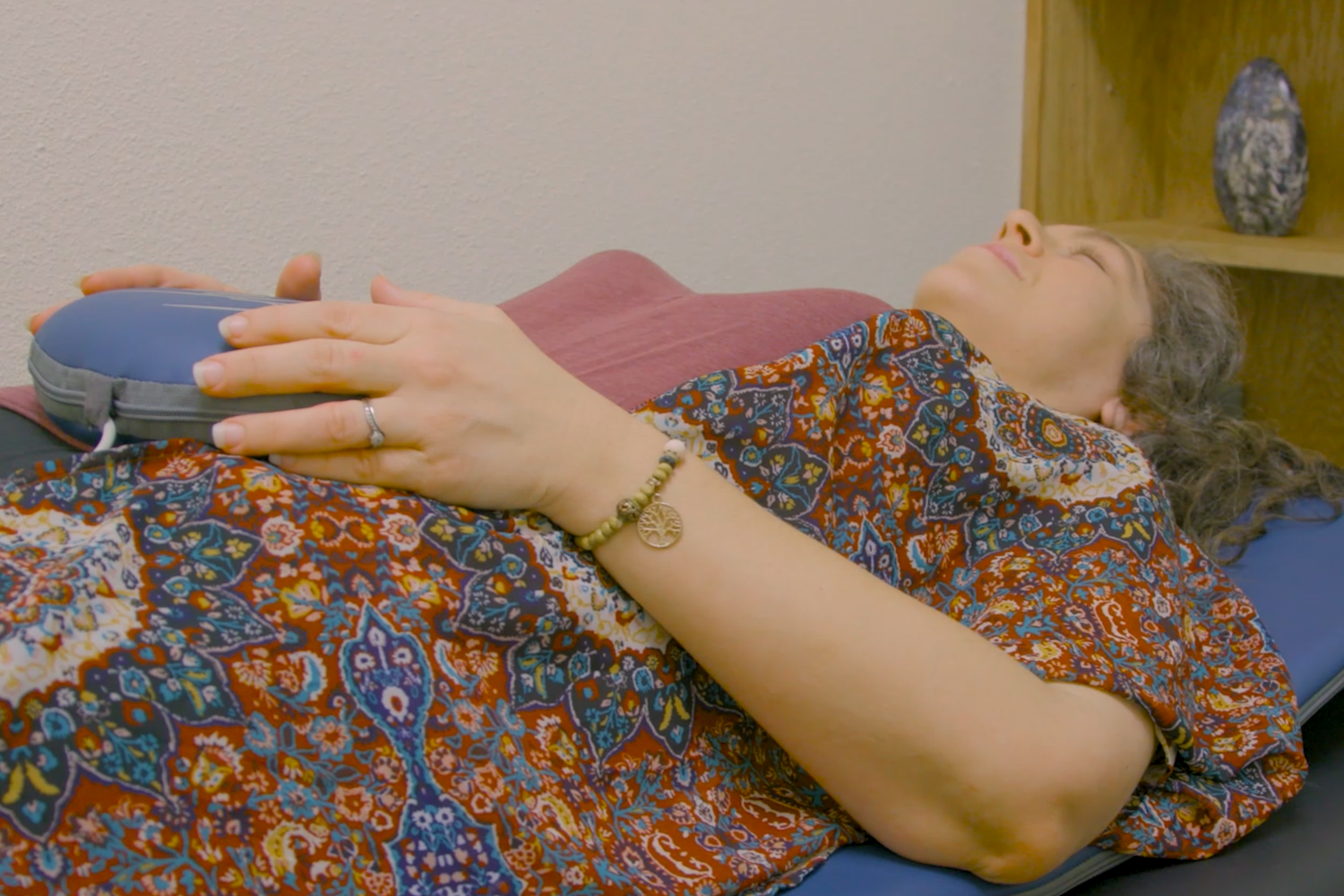
PEMF has been studied for decades, most of all for the pain and stiffness of arthritis. It is used more widely than that, too, across joint and muscle pain, nerve pain, and inflammation. The session itself is calm and passive. You rest on a full-body mat and may feel a gentle, steady pulse as the field runs.
What pulsed electromagnetic field therapy is, and how it works.
Cells carry a small electrical charge, and a good deal of what they do, making energy, repairing, signaling to each other, runs on that charge. PEMF works on that same activity. A gentle, pulsed magnetic field passed through the body meets it and gives tired or injured tissue a nudge in the right direction.
PEMF has decades of research behind it, with the largest being for the pain and stiffness of arthritis. The unit here, a MAS Multi+, is a clinical machine that runs a full-body session at the field strengths those studies used, so a session here is the therapy at research strength.
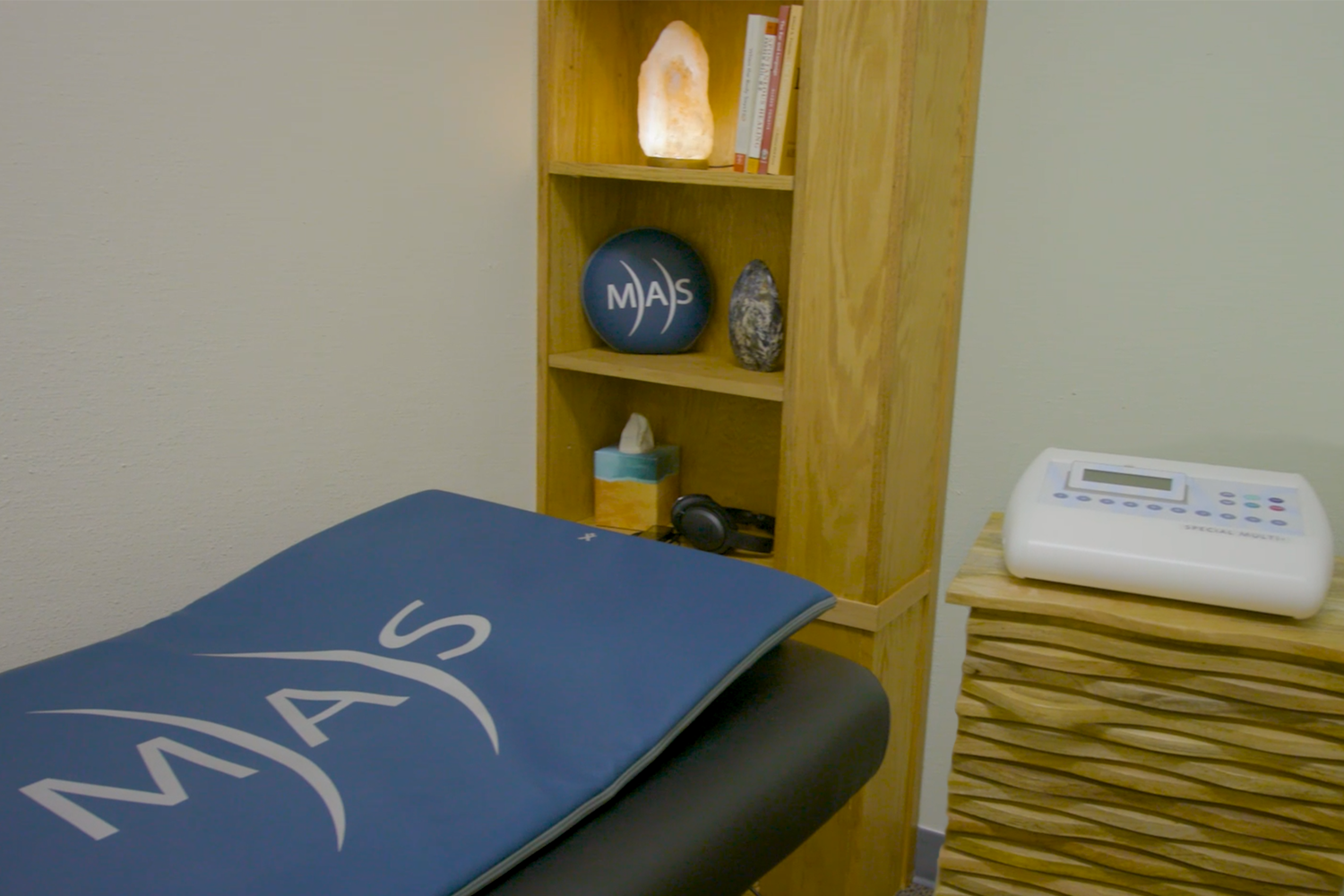
What a session feels like.
PEMF has a feel of its own. As the field pulses, many people feel a gentle, rhythmic sensation, a soft tapping or pulsing that keeps time with the machine. It can be an interesting feeling for the first minute, and an easy one to relax into.
Over an old injury or a stiff joint, the pulse often feels stronger. Some people feel it as a faint flutter in the muscle as the field cycles. People with nerve pain in the feet sometimes notice a change in the burning or tingling while they are still on the mat.
Some people, especially with nerve pain, feel a change in the very first session. For others, it comes on over a few weeks: background pain that nags a little less, morning stiffness that loosens a little sooner. PEMF is built to work over a run of sessions, so it rewards coming back.
Where this therapy really helps.
What this pairs with.
PEMF is a quiet, passive session, which makes it easy to combine with another therapy in the same visit.
Red Light Therapy
Another quiet, self-directed session that works in a completely different way, light rather than a magnetic field. People who want to cover more ground in a visit often do the two together.
Learn more →Contrast Therapy
If you're using PEMF for joint or muscle pain, the hot-and-cold of contrast therapy is a natural companion to add in the same visit.
Learn more →Full-Spectrum Sauna
PEMF after the sauna, while you're warm and loose from the heat, is an easy pairing to do in one visit.
Learn more →Mineral Bath
A warm mineral soak is a comfortable way to ease stiff joints, before or after a PEMF session. A natural pairing if you're using PEMF for arthritis.
Learn more →Grounding
Grounding is one of the simplest sessions here, just resting in contact with the earth's natural charge. It pairs naturally with PEMF, two calm, passive therapies you can do without lifting a finger.
Learn more →BioWaveGo
BioWaveGo takes a different angle on pain, working at the level of the nerve signal. Some people use the two together for stubborn pain.
Learn more →What the research shows.
What PEMF helps most is the pain and stiffness of arthritis. Its other uses, from bone density to nerve and back pain, have more modest or mixed support. Here is where each one stands.
Read the research & sourcesShow less
The technology goes back decades. The FDA cleared the first pulsed-electromagnetic bone-growth stimulator in 1979, for fractures that will not knit on their own, and those devices are still in standard orthopedic use.1 That clearance is narrow, though. It covers nonunion fractures and spinal fusion, not the general wellness use of a full-body mat, so the one does not stand in for the other.
The use most relevant here is osteoarthritis. A systematic review of placebo-controlled trials found that PEMF improved pain, stiffness, and physical function in people with osteoarthritis.2 A more recent review of knee-osteoarthritis trials is more measured. It found real but modest improvements that leaned heavily on the device settings and how long the field was used, some too small for a person to clearly notice, and it found the trials vary in quality.3 Both of those are true at once.
Bone density is a separate question from the fracture clearance above. A 2022 review of 19 trials found that adding PEMF to standard osteoporosis medication raised bone density at the spine and hip more than medication alone, and the authors described it as a complementary therapy rather than a replacement.4 On its own, the effect was smaller and less consistent. So the signal here is for PEMF as an add-on to existing care, not a stand-alone way to build bone.
For nerve pain, the studied use is the burning, tingling foot pain that can come with diabetes. In a sham-controlled trial, people who used PEMF to their feet reported about a 30% drop in pain compared with a sham device,5 and an earlier controlled trial found both less pain and early signs of nerve-fiber regrowth.6 Results across PEMF nerve-pain trials are mixed, with some showing little effect, so this one is promising rather than settled.
Two more uses have lighter support. For low back pain, a double-blind, placebo-controlled trial found that PEMF lowered chronic back pain more than a sham, though the trials in this area are few and small.7 And the anti-inflammatory effect people describe shows up mostly at the cell level: in human cartilage and bone cells, PEMF turned down inflammatory signals like the cytokines IL-6 and IL-8,8 which is thought to be part of why it eases joint pain. The everyday inflammation evidence is lighter than the laboratory evidence.
Sources
- U.S. Food & Drug Administration. Non-invasive bone growth stimulators (premarket approval P790002, approved November 6, 1979); Bone Growth Stimulators Executive Summary. fda.gov
- Yang X, He H, Ye W, Perry TA, He C. Effects of pulsed electromagnetic field therapy on pain, stiffness, physical function, and quality of life in patients with osteoarthritis: a systematic review and meta-analysis of randomized placebo-controlled trials. Physical Therapy. 2020;100(7):1118–1131. PubMed
- Huang WC. Pulsed electromagnetic field therapy in people with knee osteoarthritis: a systematic review and meta-analysis. Medicina. 2026;62(4):677. mdpi.com
- Lang S, Ma J, Gong S, Wang Y, Dong B, Ma X. Pulse electromagnetic field for treating postmenopausal osteoporosis: a systematic review and meta-analysis of randomized controlled trials. Bioelectromagnetics. 2022;43(6):381–393. PubMed
- Tassone EE, Page JC, Slepian MJ. Assessing the effects of pulsed electromagnetic therapy on painful diabetic distal symmetric peripheral neuropathy: a double-blind randomized controlled trial. J Diabetes Sci Technol. 2025. Journal
- Weintraub MI, Herrmann DN, Smith AG, Backonja MM, Cole SP. Pulsed electromagnetic fields to reduce diabetic neuropathic pain and stimulate neuronal repair: a randomized controlled trial. Arch Phys Med Rehabil. 2009;90(7):1102–1109. Journal
- Lee PB, Kim YC, Lim YJ, Lee CJ, Choi SS, Park SH, Lee JG, Lee SC. Efficacy of pulsed electromagnetic therapy for chronic lower back pain: a randomized, double-blind, placebo-controlled study. J Int Med Res. 2006;34(2):160–167. PubMed
- Vincenzi F, Targa M, Corciulo C, et al. Pulsed electromagnetic fields increased the anti-inflammatory effect of A2A and A3 adenosine receptors in human T/C-28a2 chondrocytes and hFOB 1.19 osteoblasts. PLoS One. 2013;8(5):e65561. Journal
These studies are about PEMF as a therapy, not this specific device.
This is wellness support, not medical treatment. It supports the body's own processes and works alongside your care, not in place of it.
What people ask.
Is PEMF safe with a pacemaker, an implant, or during pregnancy?
PEMF isn't used for anyone with a pacemaker, defibrillator, or certain cochlear implants, because the field can interfere with an implanted electronic device. It also isn't used during pregnancy. Metal orthopedic implants like joint replacements, screws, and plates are generally fine, since the field passes through metal without heating it. Tell us about any implant, device, or pregnancy at intake, and we'll confirm what's right for you.
How is this different from a device I can buy online?
Home PEMF devices are a reasonable thing to own, and plenty of people use them for everyday upkeep. The practical difference is intensity: the research used particular field strengths, and the MAS Multi+ here is a clinical unit built to run at that level, so a session here matches what the studies looked at.
How many sessions before I notice anything?
It varies from person to person. Some notice a change from the very first visit; for others it builds over repeated sessions across weeks. PEMF is used as a course rather than a single session, and since we can't promise a result, the best we can say is to give it a fair stretch and pay attention to whether it's helping you.
Can it be used during cancer treatment?
If you're in active cancer treatment, we ask for your oncologist's sign-off before any session, and we won't proceed without it. We're not making a claim about PEMF and cancer here; this is simply about coordinating safely with the care you're already receiving.
Some of the steadiest evidence here, and one of the easiest sessions to sit through.
PEMF is available on the Restore pass and above. It works alongside your care, not in place of it, and we're glad to talk through whether it fits what you're dealing with.