Wired, restless, and slow to wind down?
Grounding reconnects your body to the earth's gentle surface charge, the calm that barefoot contact once gave us, brought indoors. You settle back in a chair and let your system unwind. Nothing to do but rest.
Reconnecting the body to the earth's charge.
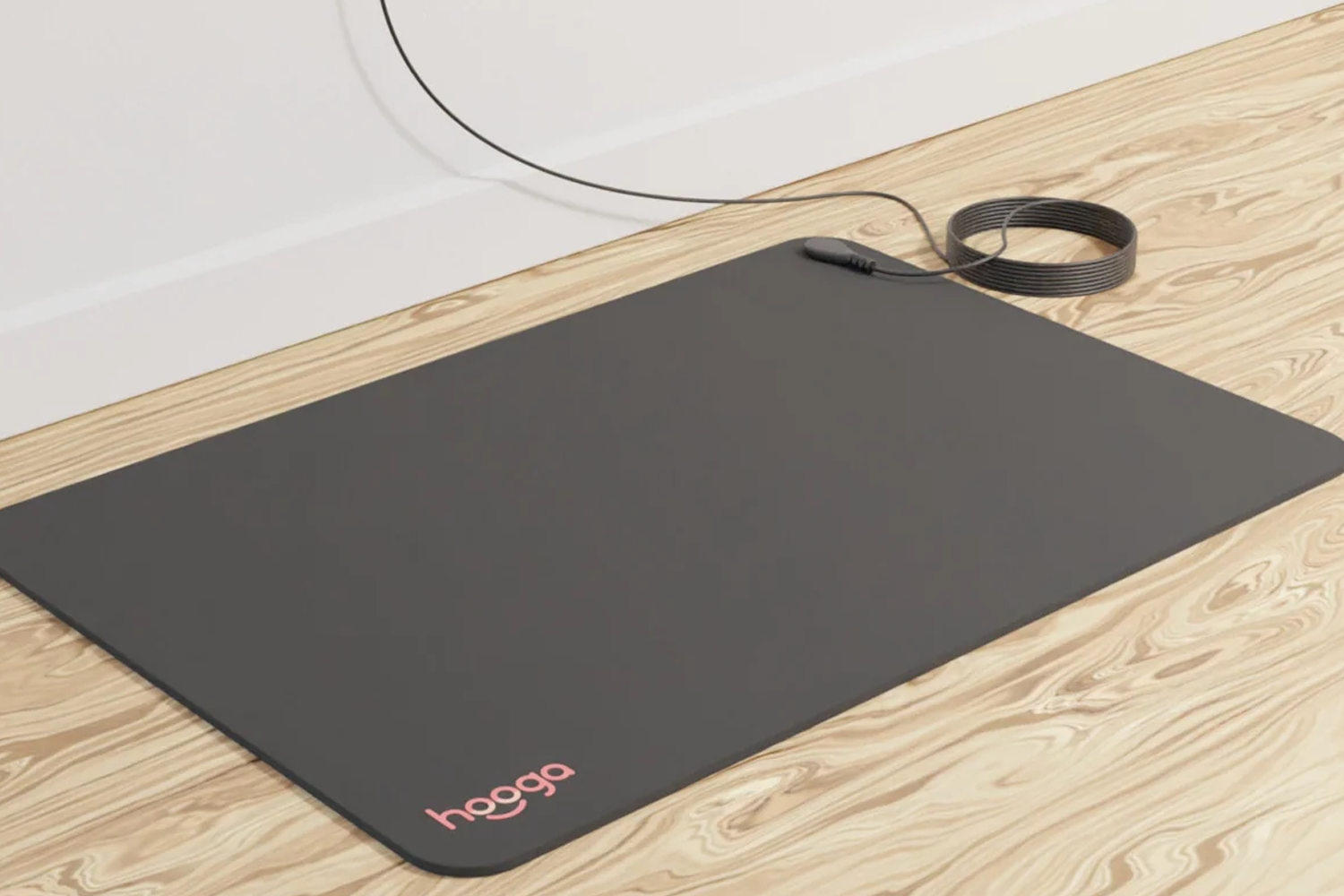
The earth's surface carries a slight negative electrical charge. When your body is in direct contact with the ground, or with a conductive surface connected to it, your body settles to that same charge. The mat here is a conductive surface tied to the building's ground, which connects through the wiring to the earth itself. The mat links you to that charge, the way standing barefoot on grass or soil would link you to the earth outdoors.
The idea grounding researchers propose is that the earth's free electrons act a little like antioxidants once they reach the body. That would ease the oxidative stress that feeds inflammation. That part is still a working theory rather than settled science. What is not in question is the physics: a grounded body sits at the earth's electrical potential. It is the same calm baseline people lived in before rubber soles and raised floors put a layer between us and the ground.
What a session feels like.
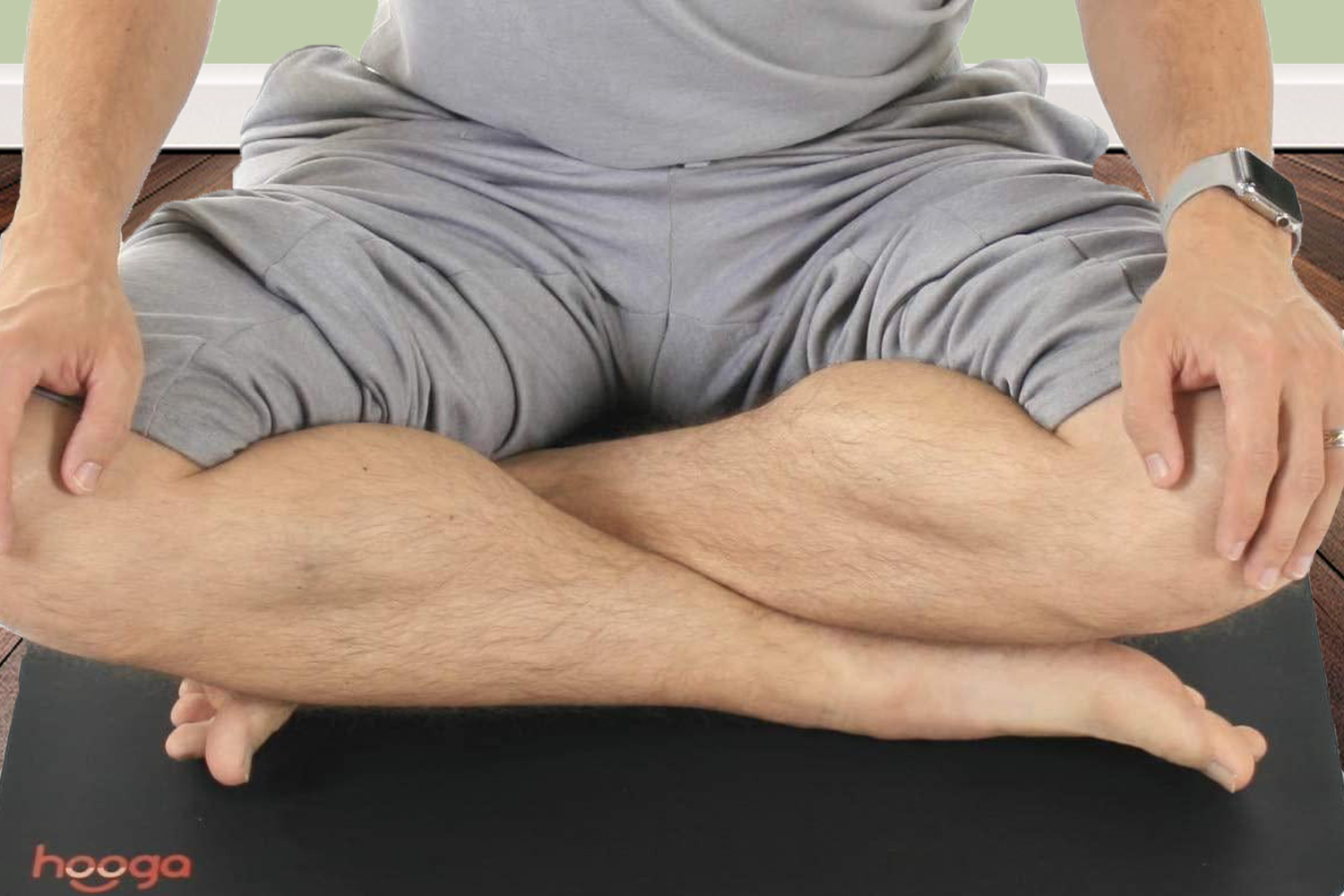
Grounding is among the most quietly restful sessions here. You ease into a chair and lie back on the grounding mat, comfortable and clothed, and that is most of it. There is no sensation from the connection itself, or at most a faint tingle as you settle in; the charge is far below anything the body can feel.
What many people notice in the first ten or fifteen minutes is a settling, the sense of the nervous system finding a floor. It is the kind of rest that arrives when the body stops bracing. A session runs thirty to sixty minutes, and some people doze.
Grounding tends to work quietly and over time rather than in a single dramatic session. Many people who use it regularly describe easier sleep, less morning stiffness, and feeling more settled in their own body between visits.
What this pairs with.
Grounding is calm and completely passive, so it sits easily alongside the other restful sessions in a visit.
Zero-Gravity Chair
Two of the most deeply passive sessions here, gravity eased off the body and a quiet connection to the earth, simple to settle into at the same time.
Learn more →Hydrogen-Oxygen Inhalation
Breathe the hydrogen-oxygen mix through the soft nasal cannula while you ground, two quiet, passive sessions in the same still stretch.
Learn more →LED Light Therapy
A calm, hands-off light session that sits naturally beside grounding's stillness, an easy pair of passive therapies for one restful visit.
Learn more →Full-Spectrum Sauna
Ground after the sauna to stretch out the settled, warmed-through calm the heat leaves behind.
Learn more →PEMF
Another quiet, hands-off session, an easy one to rest with while you are already lying still.
Learn more →Halotherapy
Both are calm and passive and ask nothing of you, an easy pair when you want to do nothing in particular.
Learn more →What the research shows.
Grounded, the body settles to the earth's electrical charge, which is solid physics. The health claims built on it, for sleep, calm, and inflammation, rest on a small and mostly advocate-led set of studies. Here is what they do and do not show.
Read the research & sourcesShow less
The physics is straightforward: connect the body to the earth's ground and it settles to the earth's electrical potential, which measurably lowers the small voltage our bodies pick up from the electrical environment around us. The further claim, that this eases inflammation and oxidative stress, rests on a small set of early studies. The field's main review, written by grounding's leading proponents, gathers reports of lower inflammatory markers, calmer heart-rate variability, and better sleep, and calls for larger trials to confirm them.1
One small pilot found that grounding during sleep lowered night-time cortisol and nudged its daily rhythm back toward normal, with people also reporting better sleep and less pain.2
These are encouraging early signals, but the studies are small, several lack strong controls, and most come from the practice's advocates, so independent replication is still thin. Grounding is a deeply restful, passive way to settle, not a treatment for any condition.
Sources
- Chevalier G, Sinatra ST, Oschman JL, Sokal K, Sokal P. Earthing: health implications of reconnecting the human body to the Earth's surface electrons. J Environ Public Health. 2012;2012:291541. Journal
- Ghaly M, Teplitz D. The biologic effects of grounding the human body during sleep as measured by cortisol levels and subjective reporting of sleep, pain, and stress. J Altern Complement Med. 2004;10(5):767–776. Journal
These are early, mostly small studies, several from researchers connected to grounding products, and they are not a promise of a result. Grounding is not a treatment for any medical condition. If you are managing one, keep to the care your doctor has set.
This is wellness support, not medical treatment. It supports the body's own processes and works alongside your care, not in place of it.
What people ask.
Is this the same as walking barefoot outside?
Closely, yes, and that bare-earth practice has its own name: earthing. Standing with bare feet on soil, grass, or sand makes a direct electrical connection to the planet, and earthing is the precise word for it. The mat brings that same connection indoors, through a conductive surface tied to the building's ground. The service is called grounding because it is the word most people reach for. In Chinese Energetic Medicine, grounding carries a related meaning, of being settled and present in your own body, which a session like this tends to support too.
Will I feel anything?
Most people feel nothing from the connection itself, and some feel a faint tingle as they settle in. Both are normal.
Do my shoes or floors already ground me?
Usually not. Rubber and synthetic soles, and most modern flooring, act as insulators that block the contact. For most of history people spent far more time touching the bare earth than we do now, which is part of why this feels worth doing on purpose.
I have a pacemaker or an implanted device, is grounding okay?
Check with your doctor first. The mat carries no power of its own and only links you to the building's ground. But if you have a pacemaker, defibrillator, or any implanted device, your doctor is the right person to clear it before you start.
A quiet way to reconnect, and simply settle.
Grounding is available on all pass tiers, on its own or alongside another restful session. A calm, passive half hour with nothing to do but rest. It works alongside your care, not in place of it.