Short on sunlight, and feeling worn down by the gray months?
A few quiet minutes under a calibrated UVB lamp give your skin the same kind of light it uses to make vitamin D, the way a little time in the sun would. You set the timer, and sit.
A few minutes of the light your skin turns into vitamin D.
The lamp gives off ultraviolet B, the same band of light in sunshine that sets off vitamin D production in your skin. When that UVB reaches bare skin, it starts the same natural reaction the sun does, making vitamin D right there in the skin, which your body then puts to use. It is the sunlight pathway, in a short, measured dose.
The device is a calibrated UVB lamp made specifically for vitamin D, built to the FDA's safety standards for sunlamps, and you run it yourself. It is a way to support your own vitamin D, not a medical treatment.
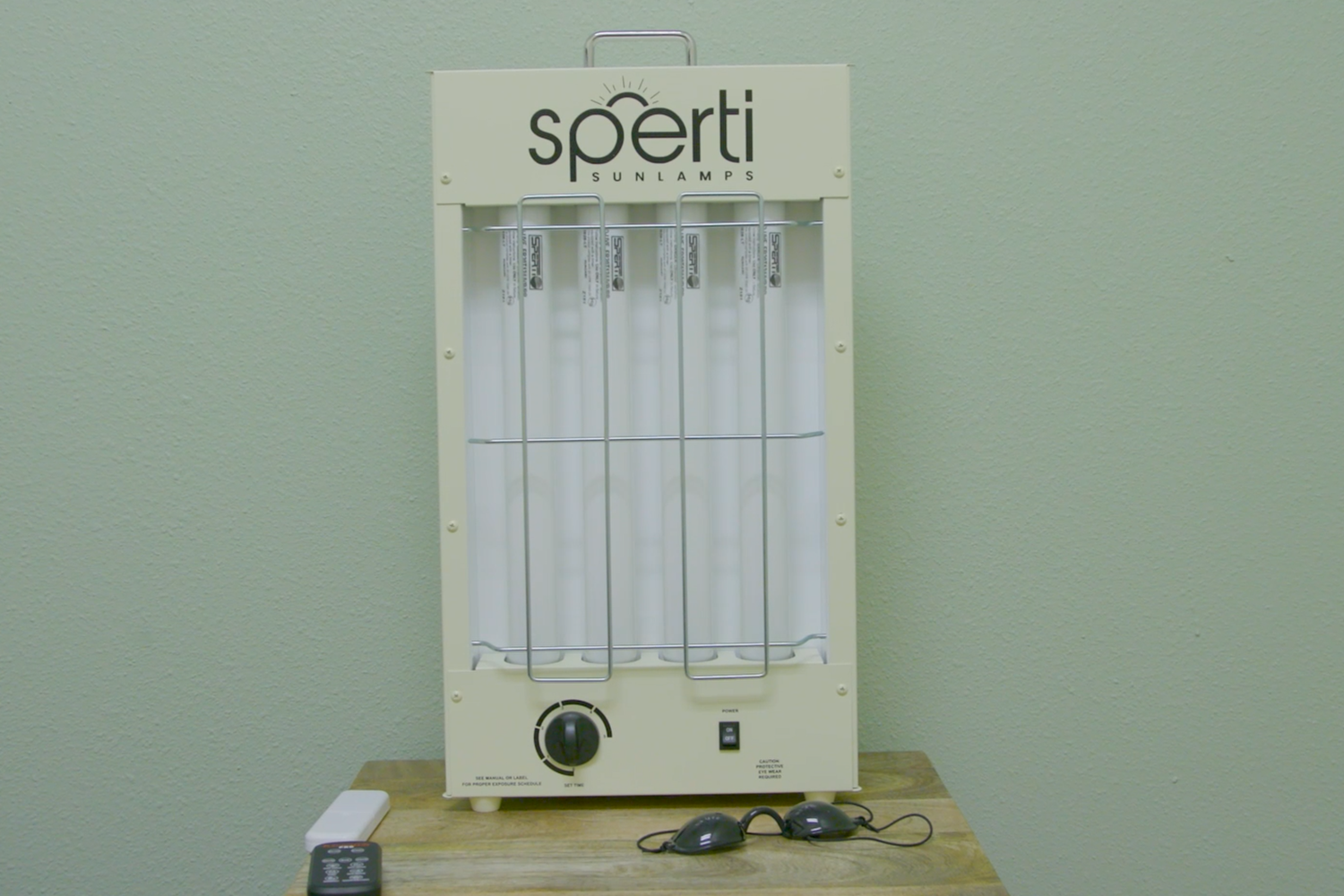
What a session feels like.
It is quick and low-key. Before you begin, you think through your skin type, your recent sun, and how your skin tends to react. Then you put on the UV-blocking goggles provided, set yourself at the distance you have chosen, and leave a small area of skin, often the arms or legs, uncovered.
The light itself lasts one to five minutes, and the lamp turns off on its own. It is bright and warm, but the unit never gets hot to the touch. You keep your first few sessions short to be sure your skin takes it well, then adjust from there.
Most people find it a pleasant, restorative pause that fits easily into a visit. Afterward you might settle on a simple routine, and, if you like, check your vitamin D levels with your doctor now and then, so you are supporting them without overdoing it.
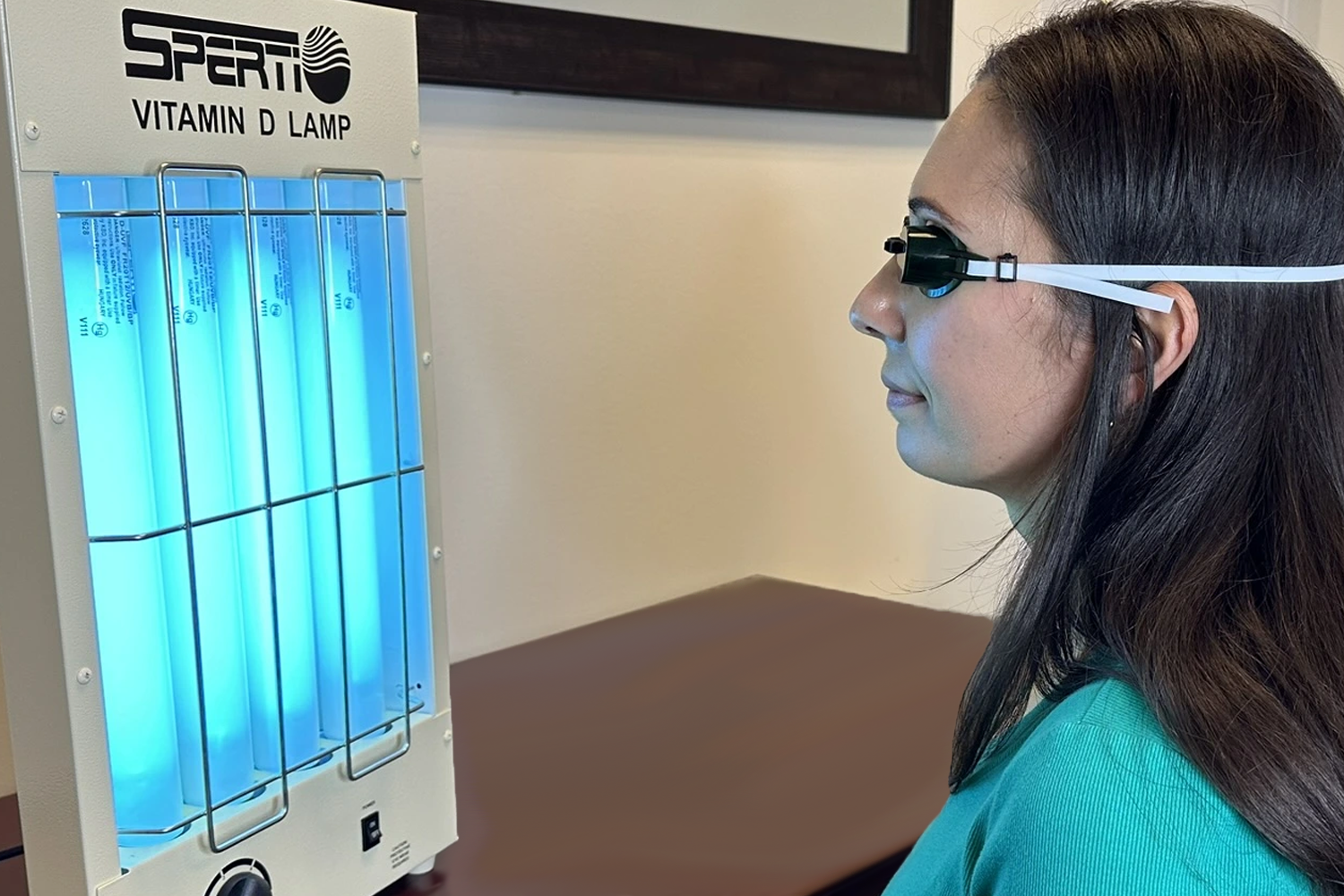
This one uses UVB, so a little care matters.
The vitamin D lamp gives off real ultraviolet B, the same ray that makes vitamin D in sunlight, and the same one that can burn or harm skin in excess. The device limits the dose and shuts off on a timer, you wear the protective eyewear provided, and you start low and build slowly. This supports your body's own vitamin D; it is not a treatment for any condition, and it works alongside your care, not in place of it.
Please skip this service, or check with your doctor first, if any of these apply: a personal or family history of skin cancer; skin that always burns and never tans; any condition or medication that increases sensitivity to light; or pregnancy. This service is for adults; for a child's vitamin D, talk with a pediatrician. If you are ever unsure, ask your healthcare provider before starting.
What this pairs with.
A quick session that fits easily alongside other therapies in a visit.
Red Light Therapy
Worth knowing these are different lights: the vitamin D lamp uses UVB to help your skin make vitamin D, while red light is non-UV light for cellular energy and recovery. Different purpose, and they do not replace each other, but they sit easily in the same visit.
Learn more →Full-Spectrum Sauna
A short vitamin D session pairs naturally with the sauna's deep, warming rest, an easy and restorative visit.
Learn more →Grounding
A calm, low-key pairing: a brief light session, then the settled, parasympathetic rest grounding brings.
Learn more →What the research shows.
UVB light makes vitamin D in the skin, and a lamp like this raises your levels when sun is short. Here is what the studies show, and what they do not.
Read the research & sourcesShow less
The pathway is well-understood. When UVB reaches the skin, it converts a natural compound there, 7-dehydrocholesterol, into previtamin D3, which the body turns into the active vitamin D it uses, the same vitamin that helps you absorb calcium for bone strength and supports healthy immune function.3
UVB lamps of this kind have been tested directly. In a controlled trial, a UVB light system raised people's blood vitamin D over several months, to a level comparable to roughly 1,000 IU of vitamin D a day taken by mouth, with no serious problems, though about half the group had minor, passing redness or itchiness; the device's maker helped run that trial.1 In a separate, independent trial, UVB exposure three times a week raised vitamin D more than a 1,600 IU daily oral dose in people who were low.2
Low vitamin D is common when sun is scarce, and it tracks with the worn-down, low-energy feeling many people notice through winter. A lamp like this helps your body make its own vitamin D, the way a little sun would. It is not a treatment for any disease, and it does the most for people who are running low to begin with.
Sources
- Shirvani A, Holick MF. Effectiveness of the SOLIUS UVB light system in enhancing serum 25-hydroxyvitamin D concentrations: a randomized controlled trial. Anticancer Res. 2025;45(8):3327–3339. Journal
- Bogh MK, Gullstrand J, Svensson A, Ljunggren B, Dorkhan M. Narrowband ultraviolet B three times per week is more effective in treating vitamin D deficiency than 1600 IU oral vitamin D3 per day: a randomized clinical trial. Br J Dermatol. 2012;167(3):625–630. Journal
- Holick MF. Vitamin D deficiency. N Engl J Med. 2007;357(3):266–281. Journal
These studies cover UVB light and vitamin D broadly, not this exact lamp, and they are not a promise of a result. How much your level rises depends on your skin type, the distance, and how often you come. If you are managing a health condition, keep to the care your doctor has set.
This is wellness support for your body's own vitamin D, not a treatment for any condition, and it works alongside your medical care, not in place of it.
What people ask.
Is it safe?
Used as directed, yes. The lamp is a calibrated UVB device with a built-in timer and automatic shutoff, and you wear the protective eyewear provided. As with sunlight, the key is moderation, which is what the short sessions are built around. The contraindications above matter, though, so please read them and decide for yourself.
Is this the same as a tanning bed?
No. The lamp is built to emit UVB in the range that supports vitamin D, not the broader UV used for tanning. It is not a tanning service and does not aim for a cosmetic tan.
How often should I use it?
Most people do well with just a few short sessions a week. Because each is only one to five minutes, it fits easily into a visit. The right frequency depends on your skin type, lifestyle, and goals, and it is yours to set.
Can I still take vitamin D supplements?
Yes. Many people combine short light sessions with supplements or diet; the lamp simply gives your body another natural route to make vitamin D. If you are combining approaches, periodic blood tests through your doctor help keep things in a healthy range.
Should I get my vitamin D levels checked?
It can help, especially if you are combining the lamp with supplements. A periodic blood test through your provider tracks your levels so you are supporting them without overshooting.
A little light, working with your body's own process.
The vitamin D lamp is available on all pass tiers, a simple, restorative few minutes that supports your own vitamin D, on your schedule. It works alongside your care, not in place of it.