A few minutes of cold, and the head clears.
A brief, controlled cold immersion that sets off a sharp jolt of alertness, eases the soreness that follows hard exercise, and, done regularly, may help steady how you handle stress. It is also the cold half of contrast therapy, on its own.
What the cold does to the body.
Stepping into water held at a therapeutic cold, for us around 50 to 55°F, sets off a strong, useful stress response. The blood vessels at the surface tighten and send blood to the core. At the same time, the body releases a surge of noradrenaline, the same chemical many alertness and mood treatments work on. That surge is what most people feel as the sharp, clear focus that arrives right after.
Done briefly and regularly, the cold may also train the body's stress response to settle more quickly, which is part of why people describe steadier mood and better stress tolerance over time. That side is less settled in the research than the immediate jolt, so it is promising rather than proven. This is the cold on its own; pair it with the sauna's heat and the back-and-forth becomes contrast therapy.
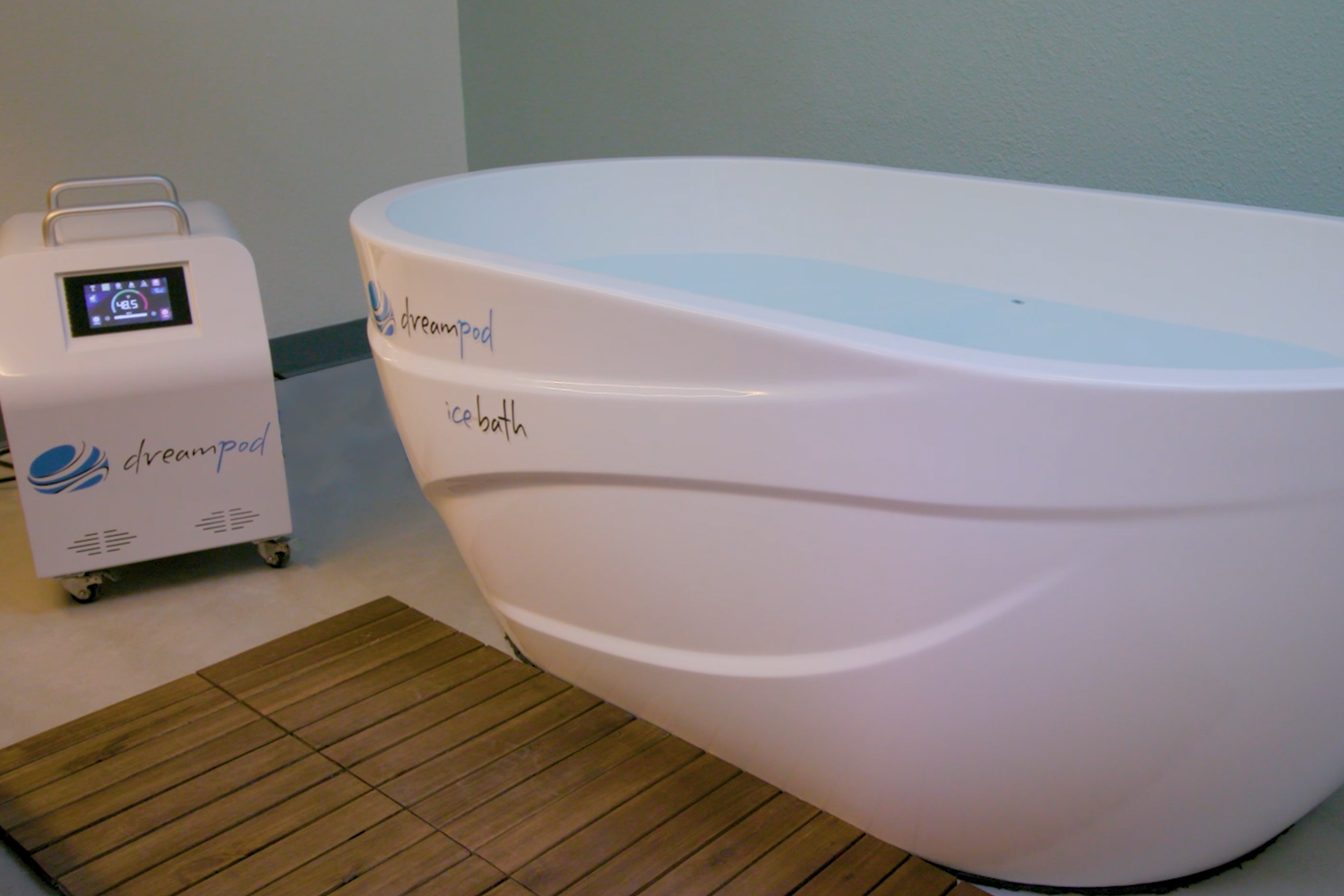
What a session feels like.
The first ten to fifteen seconds are the work: the sharp inhale, the instinct to resist. New clients start with short exposures and build from there.
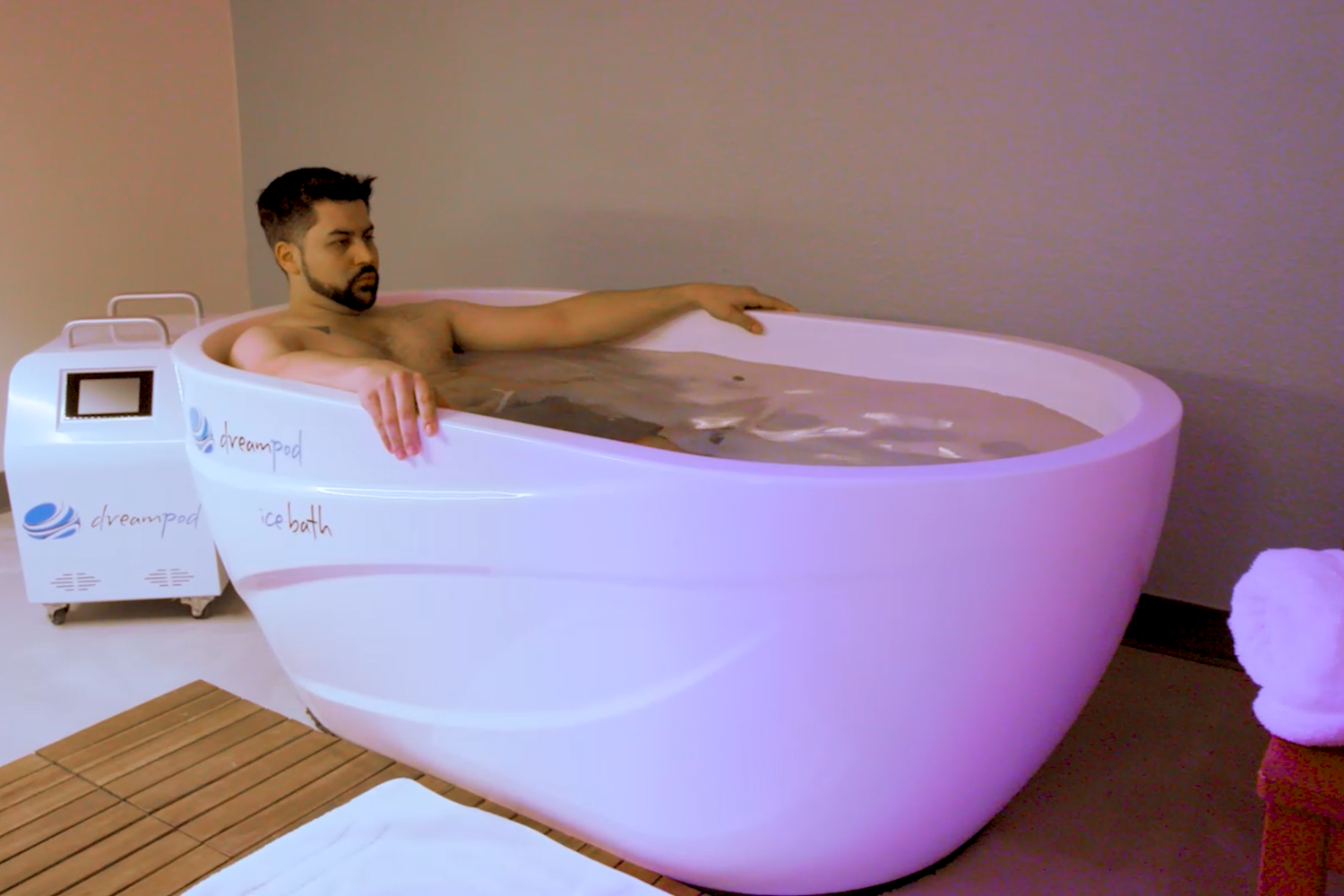
Then, around the twenty- to thirty-second mark for most people, something shifts and the cold becomes manageable. A clear, alert focus arrives, and the mind tends to go quiet and present. For a lot of people it is the most awake they feel all day.
On the way out, warmth floods back into the hands and feet, the limbs feel light, and the alertness tends to carry for a while afterward. Many people find the plunge becomes the part of the visit they look forward to most, something that felt impossible on the first try and second nature within a few visits.
Where this therapy really helps.
What this pairs with.
Cold plunge stands on its own, and works well in sequence with heat or a calm session to come back down.
Full-Spectrum Sauna
Sauna then plunge is the classic contrast: the heat opens the vessels, the cold tightens them, and going back and forth is the whole point.
Learn more →Red Light Therapy
Red light is a calm, passive session to add afterward, and a common pairing for recovery.
Learn more →PEMF
PEMF is an easy, passive session to pair with the plunge in a recovery-focused visit.
Learn more →Grounding
Grounding settles the system right after the plunge fires it up, an easy way to come back down before you leave.
Learn more →What the research shows.
The clearest effect is one people feel: a cold plunge raises noradrenaline, the chemical behind alertness and a clear head. It also looks promising for stress, sleep, and mood. The one real catch matters if you train for muscle: a plunge right after lifting can work against the gains.
Read the research & sourcesShow less
The clearest effect is the one people feel. Cold immersion drives up noradrenaline, the chemical behind alertness and focus. One often-cited study measured a rise of more than fivefold, along with a smaller and less consistent rise in dopamine.1 Worth knowing: those dramatic numbers came from a long exposure, an hour in 14°C water, far longer than a brief plunge, so a few minutes won't produce the same peak. But shorter, colder dips do reliably raise noradrenaline, which fits the clear-headed lift most people describe.
On the wellbeing side, a 2025 review pulling together the trials found that cold immersion may lower stress, improve sleep, lift quality of life, and even cut the number of sick days people took off work. The same paper adds the qualifier: several of those effects were short-lived (stress relief lasted only about half a day), and the evidence base is still small, with few large trials.2 So it is promising for stress, sleep, and mood.
There is a mood side too, and the smaller controlled studies line up. In one, a short whole-body cold bath left healthy adults feeling more active, alert, and inspired, and less distressed and nervous, with matching shifts in brain activity.4 A sea-immersion study found the same shape: a clear drop in tension, anger, and low feeling, and a rise in vigour.5 The pooled review above is the caution: only one of its trials measured mood, and that trial found no overall change. So the lift is promising and fairly steady in the small studies, and not yet settled in the larger analysis.
Here is the catch. Cold dampens the inflammation that follows hard exercise, which is part of why it eases soreness, but that same dampening blunts muscle growth. In a 12-week study, cold immersion right after strength training cut the gain in muscle size from about 15% down to about 2%.3 The effect on raw strength is more debated, but the message is practical: for recovery and feeling better, the plunge is useful; if your goal is building muscle, don't plunge right after lifting.
Sources
- Šrámek P, Šimečková M, Janský L, Šavlíková J, Vybíral S. Human physiological responses to immersion into water of different temperatures. European Journal of Applied Physiology. 2000;81(5):436–442. Journal
- Cain T, Brinsley J, Bennett H, Nelson M, Maher C, Singh B. Effects of cold-water immersion on health and wellbeing: a systematic review and meta-analysis. PLoS ONE. 2025;20(1):e0317615. PubMed
- Roberts LA, Raastad T, Markworth JF, et al. Post-exercise cold water immersion attenuates acute anabolic signalling and long-term adaptations in muscle to strength training. The Journal of Physiology. 2015;593(18):4285–4301. PubMed
- Yankouskaya A, Williamson R, Stacey C, Totman JJ, Massey H. Short-term head-out whole-body cold-water immersion facilitates positive affect and increases interaction between large-scale brain networks. Biology (Basel). 2023;12(2):211. PubMed
- Kelly JS, Bird E. Improved mood following a single immersion in cold water. Lifestyle Medicine. 2022;3(1):e53. Journal
These studies describe cold immersion in general, not this specific plunge, and none of them is a promise of a result. The strongest support is for the acute alertness effect; the wellbeing effects are promising but still early.
This is wellness support, not medical treatment. It supports the body's own processes and works alongside your care, not in place of it.
What people ask.
I've never done a cold plunge. How cold is it?
Our plunge sits around 50 to 55°F, within the research-supported range. New clients begin with short exposures, often just thirty to sixty seconds, and build gradually. For your first plunge we'll show you how it works and share a few breathing tips that make the cold easier to settle into, then leave you to it.
Is it safe with a heart condition or in pregnancy?
Cold immersion is a real cardiovascular stimulus, so some situations call for medical clearance first, including uncontrolled high blood pressure, recent cardiac events, Raynaud's in an acute phase, and pregnancy. Our intake captures your history and we set the protocol accordingly, and we never push past what's comfortable.
Is cold plunge different for women?
The basics are the same, with a few things worth knowing. Women tend to feel the cold sooner and lose heat faster in the hands and feet, partly a matter of body size and composition. So a gentler approach often suits: the warmer end of our range and a shorter dip, rather than a colder or longer one. Many women also notice their response shifts across the month. In the stretch before a period, when baseline body temperature runs a little higher, a shorter, easier session tends to sit better. None of this is a rule. The research on sex differences is still thin, and much of the older guidance was based on men, so we treat it as comfort-first caution, not a formula. Tell us what you're noticing and we'll shape the cold and the timing around you.
How long should I stay in?
Start short, thirty to sixty seconds, and build toward two to three minutes as you adapt. More isn't better here. The benefit is in the controlled cold stress, not in endurance, so we'd rather you go brief and consistent than long and occasional.
Should I plunge right after lifting weights?
If your aim is recovery or just feeling better, it's fine. If your aim is building muscle, hold off: cold immediately after strength training blunts the growth signal, so it's better to leave a few hours between lifting and the plunge, or save it for non-lifting days. For the alertness and stress side, timing doesn't matter.
Why does the cold produce such a noticeable mood shift?
Cold immersion at these temperatures drives up noradrenaline, a chemical central to attention, focus, and mood. The clear-headed lift most people feel tracks with that measured rise, which is why the effect is fairly reliable rather than imagined.
Brief, bracing, and easier every time you come back.
The cold plunge is available on all pass tiers, on its own or as the cold half of a contrast session. Start short and build at your own pace. It works alongside your care, not in place of it.